From Sicily to Russia: A Life Cooked with Love
A chef’s journey through Italian tradition, international kitchens, entrepreneurship and consultancy—guided by one enduring philosophy: ‘You must always cook for someone… otherwise, you are simply cooking.’
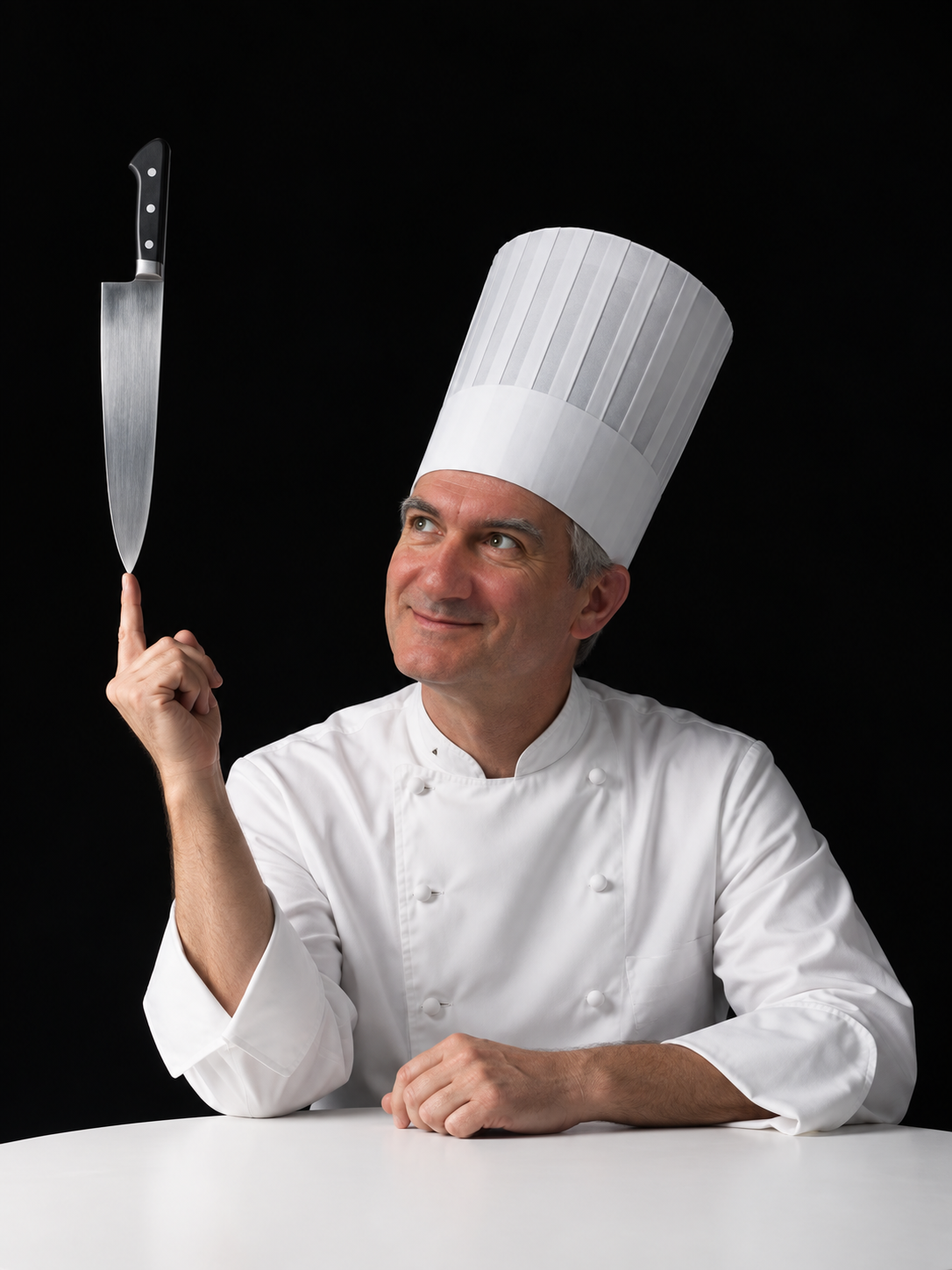
An editorial journey through Chef Gaetano Zambito’s Italian roots, international kitchens, restaurant entrepreneurship, culinary consultancy, and a philosophy centered on cooking with genuine care for the person receiving the plate.
For some chefs, cooking begins with technique. For others, it begins with ambition. For this Sicilian chef, it began much earlier—with the smell of Sunday soffritto, the warmth of an enormous family gathering, and the understanding that food acquires its deepest meaning when it is prepared for someone.
His story stretches from Sicily to Friuli, Rimini and the Dolomites; from Spain and Germany to Iran; and eventually to Russia, where he would establish his own restaurant and redefine his professional identity. Yet geography tells only part of the story. At its heart is a career built around curiosity, adaptation and a deceptively simple belief:
“You must always cook for someone… otherwise, you are simply cooking.”
It is a philosophy he has passed on to trainees and students throughout his career. The secret ingredient, he tells them, is love. A guest may never see what happens behind the kitchen doors, but they can perceive whether genuine care has gone into what arrives at the table.
Where It Began: Sundays in Sicily
His earliest culinary education did not take place in a professional kitchen.
It happened at home in Sicily.
Sunday mornings carried the aroma of soffritto. Family gatherings could bring together around forty relatives, transforming the preparation of lunch into a collective ritual. Cooking was not confined to one person or even to the women of the family. Everyone participated.
His father had a particular responsibility: the fire.
Anything destined for the grill belonged to him.
Those memories established an idea that would remain with the chef throughout his career: food is inseparable from people. Cooking is not merely production; it is an act of hospitality, memory and connection.
After completing his studies, he entered professional cooking through an osteria owned by his aunt. It gave him his first opportunity to get his hands dirty and understand the realities of restaurant work.
But ambition soon demanded something larger.
Nine Months of Pots and Pans
After approximately a year, he entered an important restaurant under the direction of an Executive Chef.
The brigade numbered around 45 cooks.
He was the newcomer.
The professional kitchen of that period was uncompromising. Young cooks were expected to work, observe and learn. Advancement was earned through patience rather than demanded through ambition.
For nine months, his principal responsibility was cleaning pots and pans.
It was hardly glamorous, but it became part of his education.
Eventually, he earned his opportunity on the seafood appetizer section. The transition represented more than a change of station. It marked the beginning of his development inside a structured professional brigade and strengthened an affinity for seafood that would repeatedly surface throughout his career.
After two years, however, he wanted more.
He headed north.
Sicily Meets Friuli
His next chapter unfolded in Friuli, where he joined a hotel restaurant as Sous Chef.
Two years later, he took command of the kitchen.
It was here that his personal culinary language began to emerge.
The flavors and memories of Sicily encountered the gastronomic traditions of Friuli and Veneto. Instead of treating these cuisines as separate identities, he began exploring what could happen when they were allowed to interact.
Most importantly, he developed a characteristic that remains visible in his cooking today: the deliberate relationship between sweet and savory.
Rather than sweetness appearing merely as contrast, it became part of the architecture of the dish—a tool capable of balancing salinity, acidity, richness and bitterness.
That philosophy can still be seen clearly in the dishes that represent his cuisine.
Cous Cous al Pesto di Basilico · Crema di Gorgonzola · Cioccolato Fondente
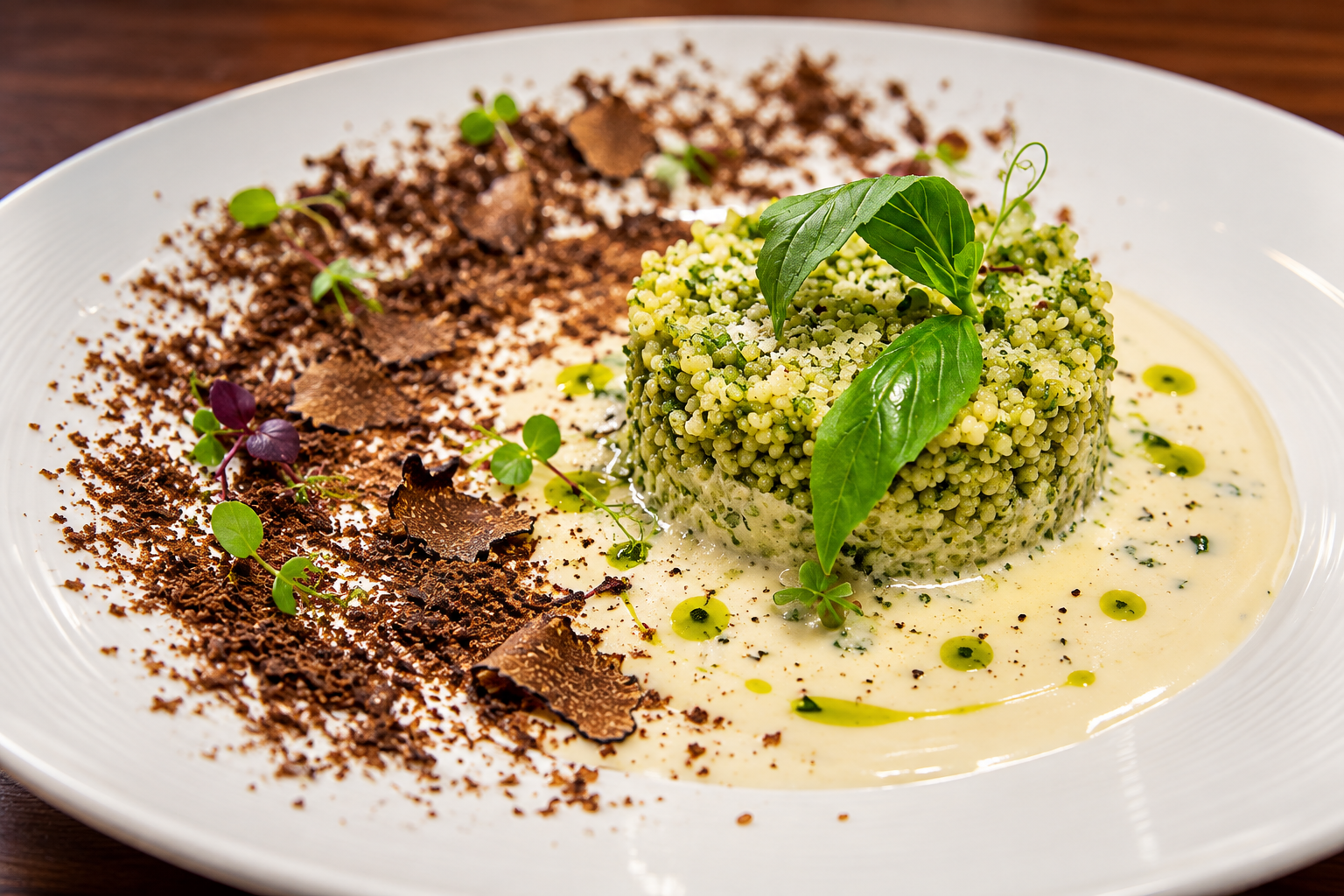
Cous Cous al Pesto di Basilico · Crema di Gorgonzola · Cioccolato Fondente
A dish that immediately communicates his approach to contrast.
Couscous dressed with the aromatic freshness of basil pesto encounters the unmistakable intensity of Gorgonzola, while dark chocolate introduces bitterness, depth and an unexpected aromatic dimension.
It is unconventional without abandoning Mediterranean references.
The plate reflects the chef's willingness to challenge the traditional separation between savory and sweet while maintaining balance as the governing principle.
Rimini, Pizza and Another Education
After nine years in northern Italy, the journey continued to Rimini, Emilia-Romagna, where he became involved with the local Italian chefs' association.
There, another professional encounter expanded his understanding of Italian food.
He met a talented pizzaiolo named Paolo.
Already an experienced chef, he nevertheless asked Paolo to teach him pizza from the perspective of a genuine pizzaiolo.
The distinction mattered.
Making pizza as a cook, he discovered, was not the same as understanding it as a specialist. Fermentation, maturation, hydration, temperature and the interaction of different flours opened an entirely new field of study.
It reinforced something his career had already taught him: experience should never become an excuse to stop learning.
Restaurant work, meanwhile, brought him repeatedly back to one of his strongest culinary passions—fish and seafood.
Filetto di Tonno Scottato · Salsa allo Zafferano · Fichi Caramellati Salati
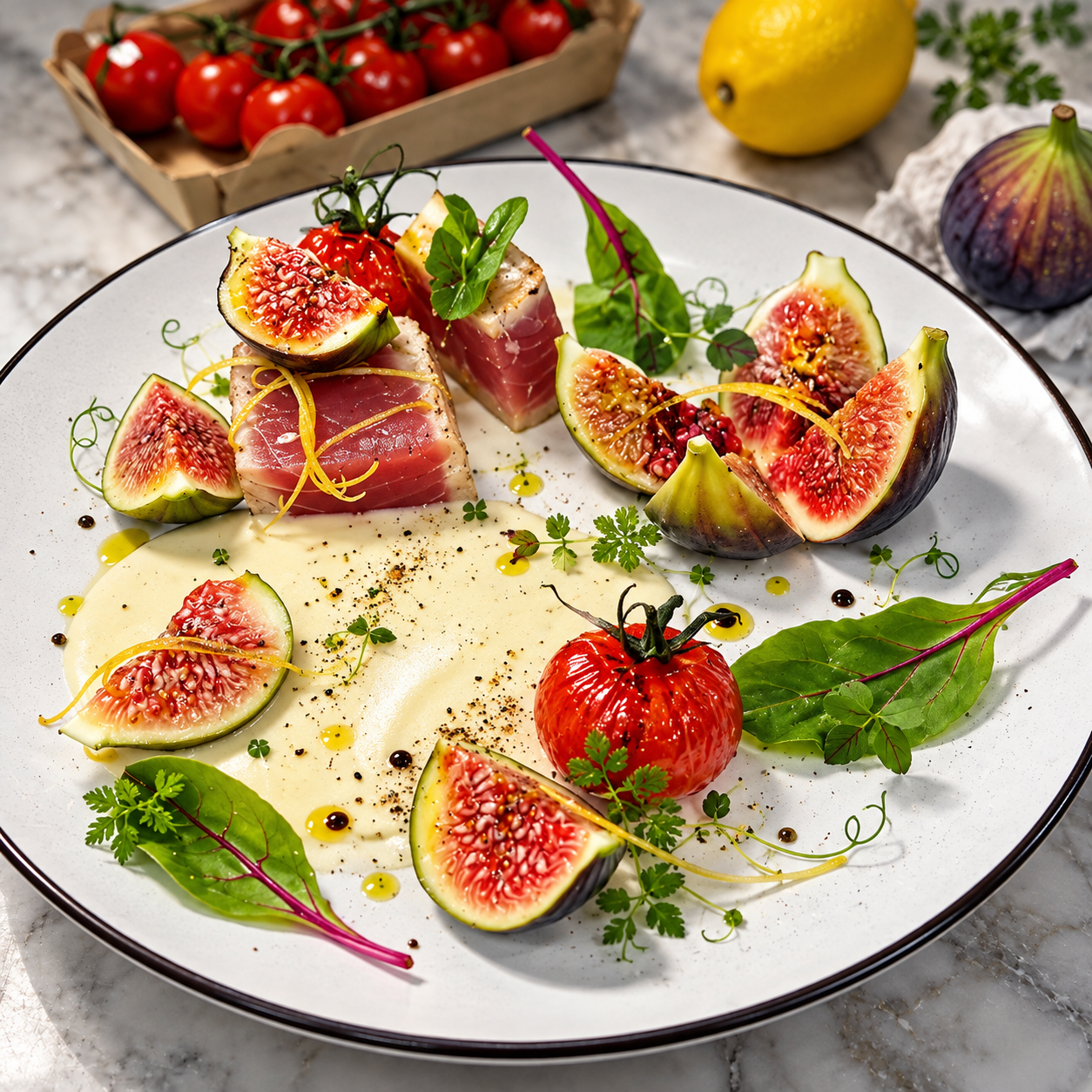
Filetto di Tonno Scottato · Salsa allo Zafferano · Fichi Caramellati Salati
The tuna dish demonstrates the chef's characteristic balance of restraint and contrast.
The fillet is seared with extra-virgin olive oil and butter, maintaining the integrity of the fish while creating richness on its exterior. Saffron sauce introduces perfume, warmth and Mediterranean identity.
Then come the figs.
Caramelized yet deliberately salted, they bridge sweetness and salinity—the recurring signature of the chef's cuisine.
It is a plate in which technique supports the ingredient rather than competing with it.
Capesante Sous Vide · Gamberi · Salsa al Parmigiano · Olio al Basilico
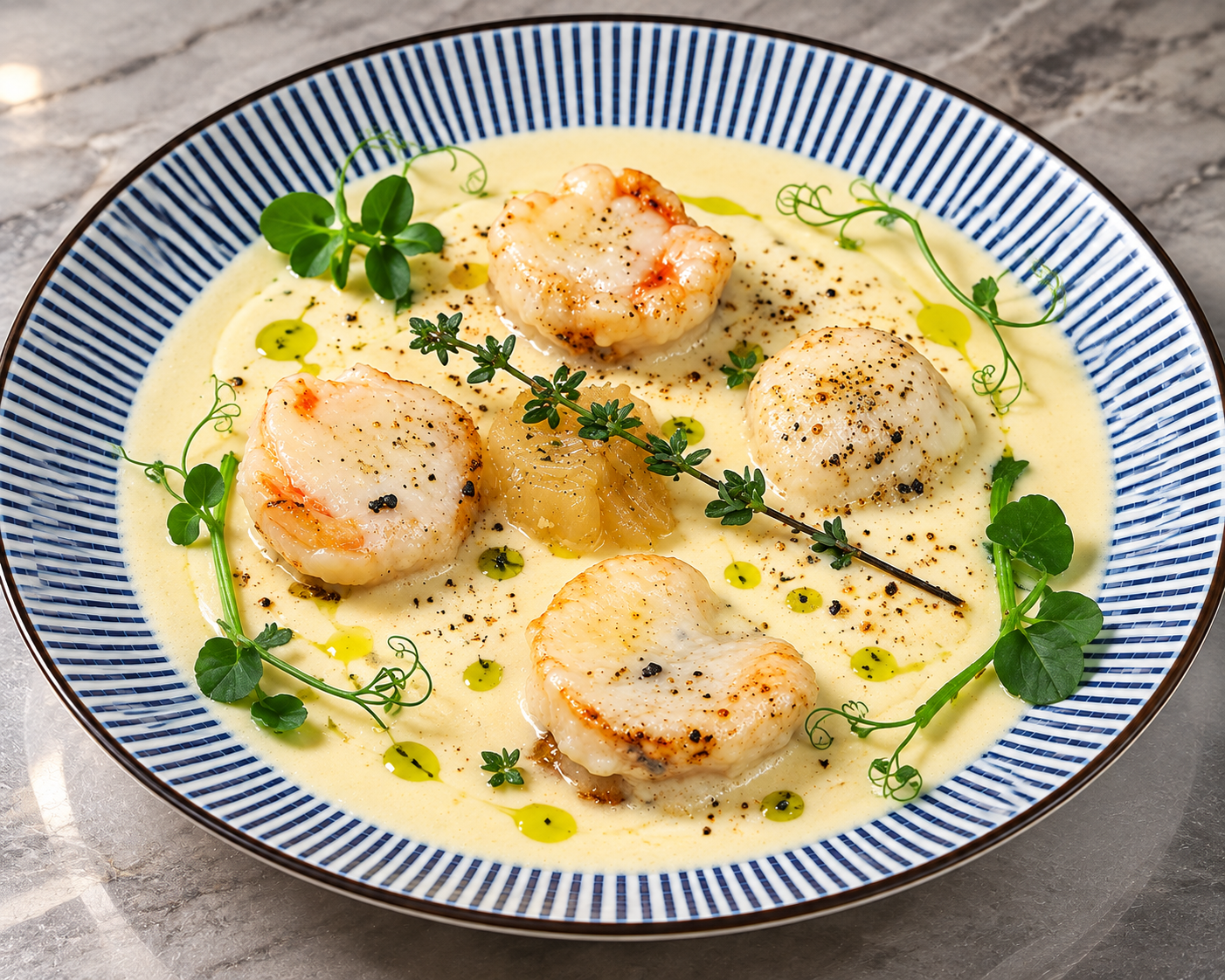
Capesante Sous Vide · Gamberi · Salsa al Parmigiano · Olio al Basilico
The same philosophy takes a different form with scallops and prawns.
Here, sous-vide cooking provides precision and control, preserving the delicacy and texture of the scallops. Parmesan sauce brings Italian character and richness, while basil oil contributes freshness and aromatic clarity.
It represents the intersection between classical Italian ingredients and contemporary technique—a cuisine that respects tradition without being restricted by it.
Between the Riviera and the Dolomites
Professional life became seasonal.
Summers were spent along the Romagna Riviera, winters in the Dolomites.
Twelve seasons followed.
Then economics changed the direction of his career.
Restaurants were increasingly restructuring their labor models in pursuit of lower operating costs, and eventually he lost his position.
By then, he had recently become a father.
What initially appeared to be professional instability ultimately became the beginning of his international career.
He left Italy.
Spain, Germany and Iran
Contracts took him first to Spain, then Germany, and later Iran.
The assignments were relatively short, but their influence was considerable.
International kitchens revealed differences not only in ingredients and recipes but also in organization, culture, expectations and the way people understand hospitality.
Travel began to broaden the chef beyond the boundaries of regional Italian cuisine.
Yet professional growth came with a personal cost: distance from his family.
Eventually, he decided it was time to return to them.
The destination was Chelyabinsk, Russia.
He arrived without knowing Russian.
Within a week, he was working in one of the city's leading restaurants.
Building an Italian Identity in Russia
Six months after his arrival, he moved to another restaurant in Chelyabinsk, remaining there for approximately nine months before another opportunity took him to Ekaterinburg.
There, he managed the kitchen of an Italian restaurant with Italian ownership.
Then came the decisive move.
He returned to Chelyabinsk and opened his own trattoria and pizzeria.
What began as a personal project became an established restaurant, celebrating its ninth anniversary on September 23.
Running his own operation added another dimension to his professional identity. The chef was no longer responsible solely for food. Cuisine had to coexist with purchasing, staffing, consistency, costs, guest expectations and commercial sustainability.
His experience subsequently expanded to Magnitogorsk, where he developed another project as a Brand Chef, while his involvement with an international culinary association led to his role as an Ambassador of Taste.
The Dishes as a Culinary Autobiography
Look closely at the chef's plates and the geography of his career begins to emerge.
Mediterranean ingredients remain present, but they are interpreted through years of movement, experimentation and exposure to different culinary environments.
Filetto di Manzo · Salsa ai Mirtilli · Bouquet di Verdure al Vapore
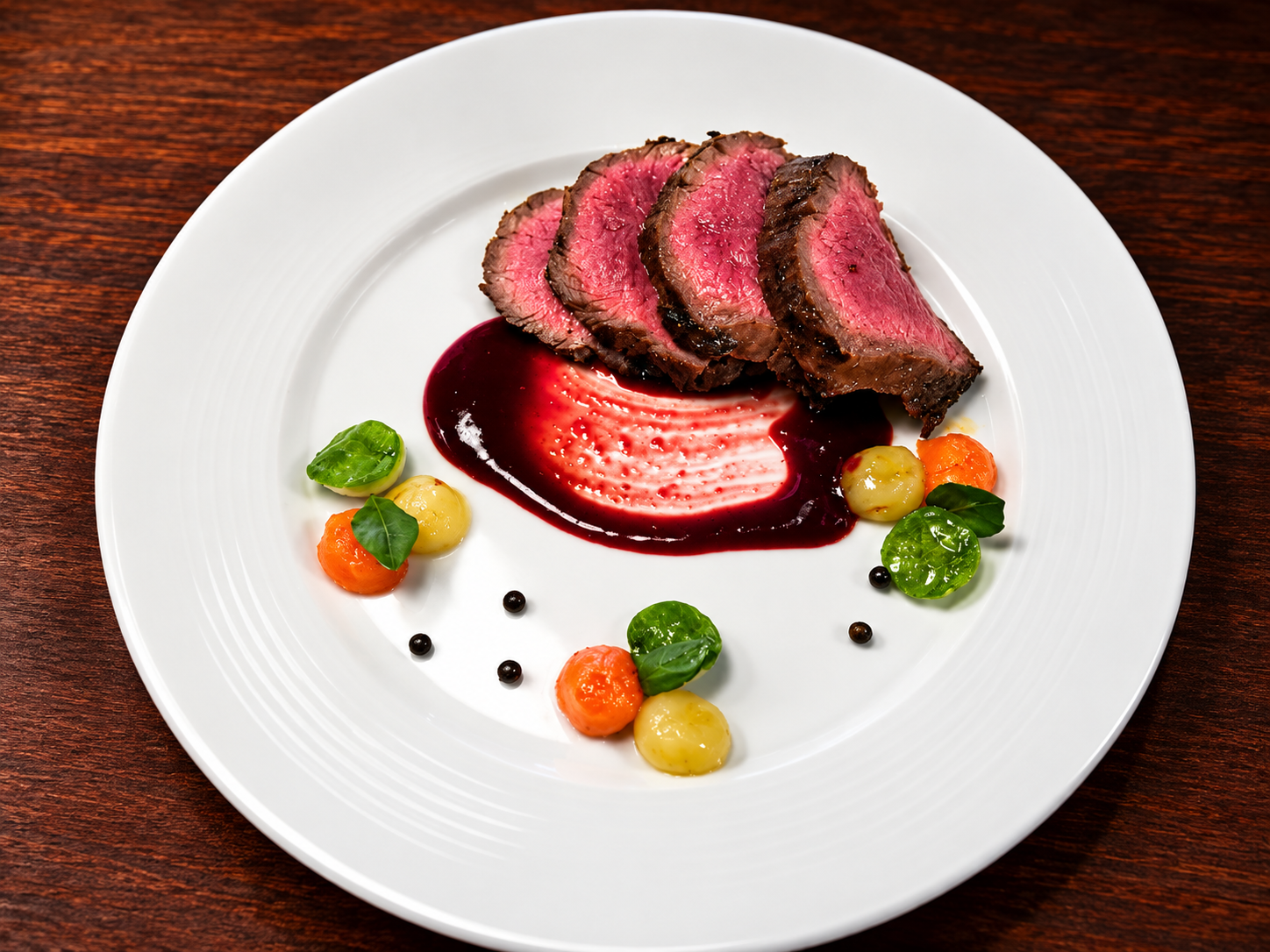
Filetto di Manzo · Salsa ai Mirtilli · Bouquet di Verdure al Vapore
The beef fillet presents another expression of the chef's sweet-savory signature.
The richness and depth of beef are contrasted by the fruit acidity and sweetness of a blueberry sauce, while a bouquet of steamed carrots, zucchini and potatoes provides a restrained vegetable accompaniment.
It is a composition based on contrast without excess: meat, fruit, vegetables and sauce, each retaining a recognizable identity.
And the chef's philosophy does not disappear when the menu reaches dessert.
Arancia Caramellata · Gelato Plombir · Glassa al Balsamico
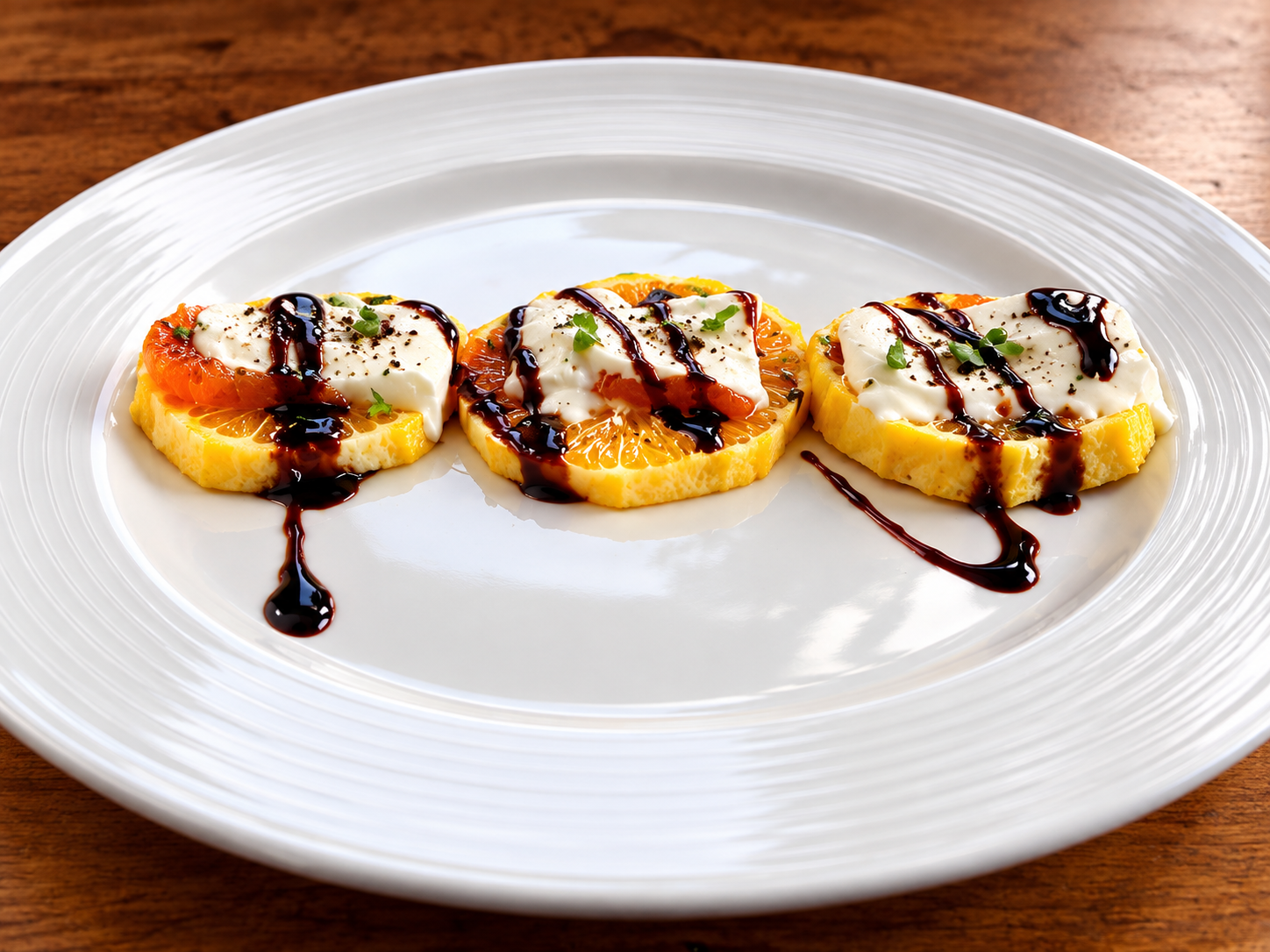
Arancia Caramellata · Gelato Plombir · Glassa al Balsamico
Caramelized orange provides acidity, bitterness and sweetness. Plombir ice cream, familiar throughout Russia and Eastern Europe, introduces a distinctly different cultural reference, while balsamic glaze reconnects the composition with Italy.
In a few elements, the dessert effectively summarizes the chef's journey: Italy and Russia meeting on the same plate.
From Chef to Consultant
During the last two years, his work has increasingly moved between Russia and Rome.
In Rome, he worked as a consultant for a restaurateur operating 32 restaurants.
The assignment demanded a different perspective.
Instead of looking only at what happened at the stove, he examined restaurants individually, identified weaknesses and opportunities, and collaborated with their chefs on menu development and profitability.
It was the natural evolution of decades spent observing restaurants from almost every possible position: junior cook, chef, kitchen leader, restaurateur, Brand Chef and consultant.
Today, that accumulated experience is becoming a project of its own.
His ambition is to develop his work as a Consultant Chef, supporting restaurants during both start-up and restructuring, from culinary identity and menu development to operational improvement and profitability.
The vision is international. Russia remains an important part of his professional world, but his attention is increasingly drawn toward opportunities elsewhere—particularly Asia.
Cooking for Someone
There is an interesting symmetry to the journey.
It began around a crowded family table in Sicily, with approximately forty relatives waiting for Sunday lunch and his father standing over the grill.
Decades later, after professional brigades, seafood stations, hotels, pizzerias, seasonal kitchens, international contracts, restaurant ownership, brand development and consultancy, the essential idea has remained remarkably unchanged.
Technique matters.
Ingredients matter.
Discipline, food cost, organization and profitability matter.
But none of them, in his philosophy, represents the final purpose of cooking.
The purpose is the person on the other side of the plate.
That is why the principle he teaches young cooks may also be the simplest summary of his entire career:
“You must always cook for someone… otherwise, you are simply cooking.”